What Is 2 Ply, 3 Ply and 4 Ply Wool? A Simple Yarn Ply Guide
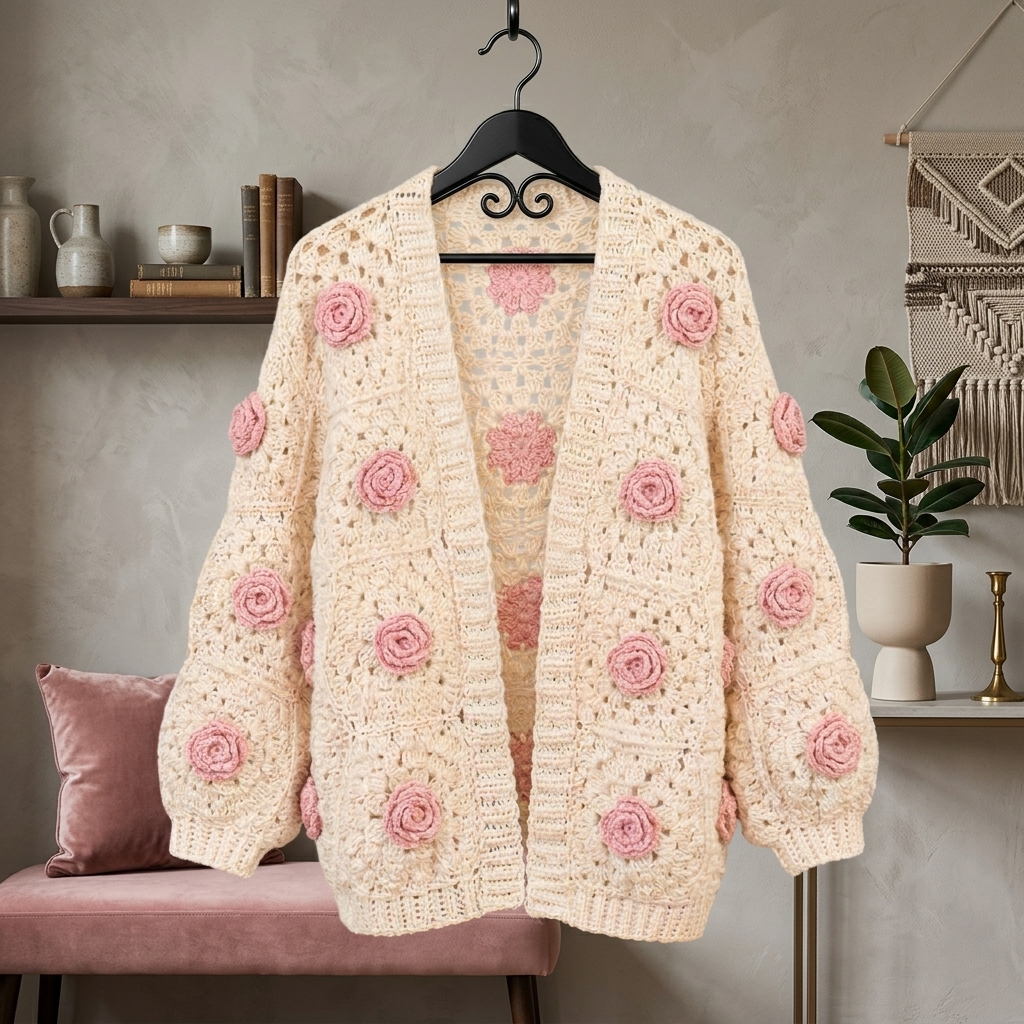
Customers often ask me what '4 ply' really means. Here is the simple answer I give them.
Fozia Mirza, crochet artist, Sukkur
When you buy wool or yarn, you often see labels like 2 ply, 3 ply, 4 ply or 8 ply. Many people think this simply means “thin” or “thick”, but there is a little more to it. Here is an easy guide to what ply means, how the common types differ and which one to choose for baby clothes.
What does “ply” mean?
Yarn is made by spinning fibres into a single strand, called a ply. Two or more of these strands are then twisted together to make a stronger, more even yarn. So:
- 2 ply = two strands twisted together
- 3 ply = three strands twisted together
- 4 ply = four strands twisted together
Does more ply always mean thicker yarn?
Not always. If each strand is very thin, a 4 ply yarn can still be fine. If each strand is thick, even a 2 ply yarn can be bulky. Over time, though, countries like the UK, Australia, New Zealand and Pakistan started using ply numbers as names for yarn weights, so a “4 ply” ball in a shop usually means a fine yarn, whatever the real number of strands. That is why it is always best to check the label for the recommended hook size and the length per ball.
Common ply types explained
2 ply (lace weight)
Very fine and light. It is used for delicate lace, shawls and fine doilies. It takes a lot of time to work with and is not usually used for everyday baby clothes.
3 ply (light fingering)
Soft and fine, popular for traditional baby wear such as lacy jackets, bonnets and christening outfits. It gives a light, delicate fabric.
4 ply (fingering)
One of the most popular choices for baby crochet. It is fine enough to look neat and delicate, but quicker to work than 3 ply. Great for dresses, cardigans, booties and caps.
8 ply (DK, double knitting)
A medium weight yarn. It works up faster and gives a slightly thicker, warmer fabric. Good for cardigans, hoodies, blankets and bags.
10 to 12 ply (worsted to chunky)
Thick yarns for warm winter wear, blankets, cushions and quick projects. Usually too heavy for small baby dresses.
Quick ply guide
| Ply | Also called | Approx. crochet hook | Good for |
|---|---|---|---|
| 2 ply | Lace | 1.5 to 2.25 mm | Lace, doilies, shawls |
| 3 ply | Light fingering | 2 to 3 mm | Delicate baby wear |
| 4 ply | Fingering | 2.25 to 3.5 mm | Baby dresses, cardigans, booties |
| 8 ply | DK | 3.5 to 5 mm | Cardigans, hoodies, blankets, bags |
| 10 ply | Worsted / Aran | 5 to 6.5 mm | Winter wear, blankets |
| 12 ply | Chunky | 6.5 to 9 mm | Thick blankets, quick projects |
Hook sizes are a general guide. Always follow the label on your yarn, as brands vary.
Buying a hook too? See our crochet hook size chart by wool ply.
Which ply is best for baby clothes?
For most baby dresses and light cardigans, 3 ply or 4 ply is ideal: soft, neat and not too heavy. For warmer winter pieces such as hoodies and jackets, 8 ply (DK) is a good choice. The fibre matters too, so read our guide to the best yarn for baby clothes.
A note on durability
Yarns made from several strands twisted together are usually stronger and more even than single-strand yarns, and they tend to pill less. If your woolens do get fuzzy balls, see how to remove pilling safely.
Custom orders at Mazagia
Every Mazagia piece is handmade to order. If you would like a lighter summer dress or a warmer winter cardigan, tell us on WhatsApp and we will choose the right yarn and ply for your baby.
Shop handmade crochet
-
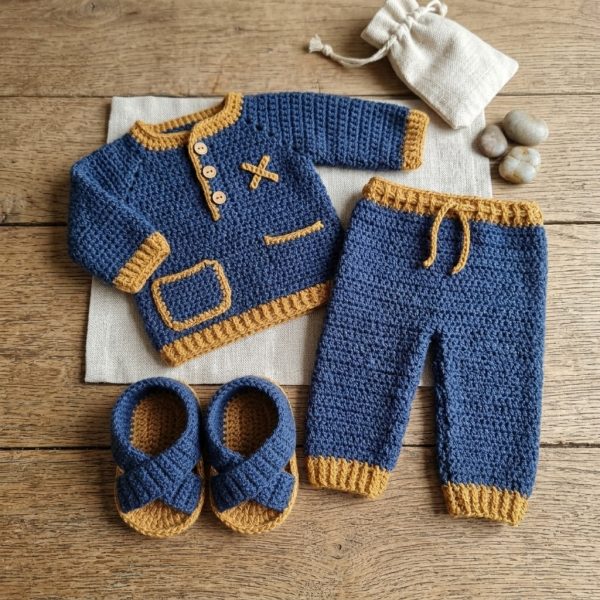
Blue & Mustard Crochet Baby Boy Set: Henley Sweater, Trousers & Sandals
Price on request: ask on WhatsApp Ask Price -
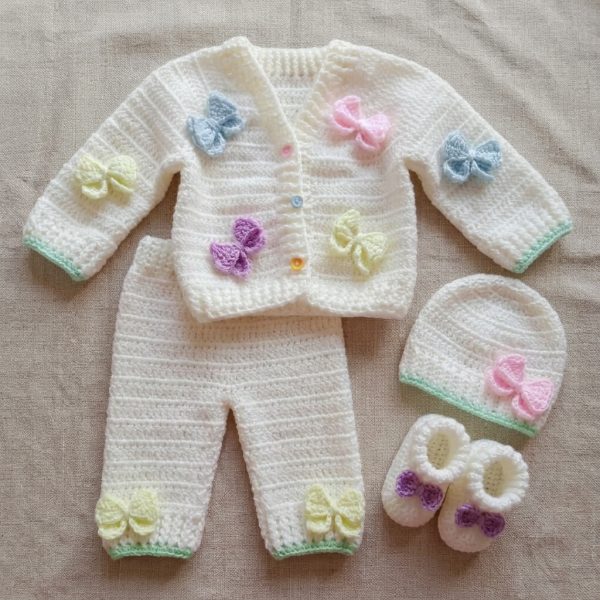
Off-White Crochet Baby Set with Pastel Bows: Cardigan, Trousers, Cap & Booties
Price on request: ask on WhatsApp Ask Price -
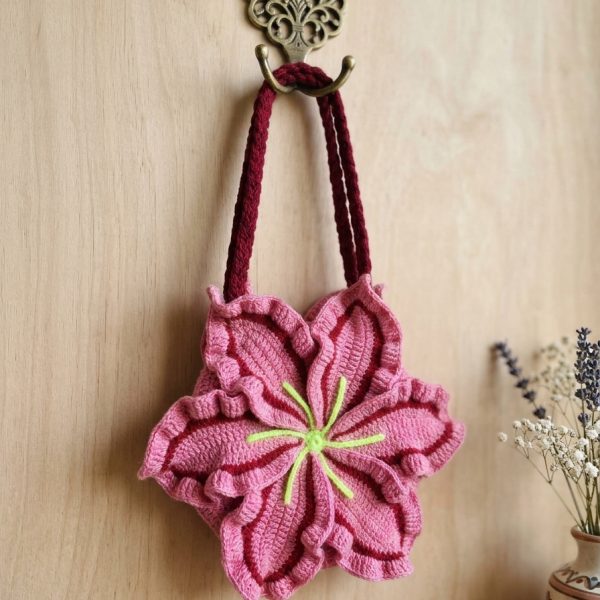
Pink Lily Flower Crochet Shoulder Bag
Price on request: ask on WhatsApp Ask Price