Crochet Stitches Guide: From Chain Stitch to Star and Peacock Stitch
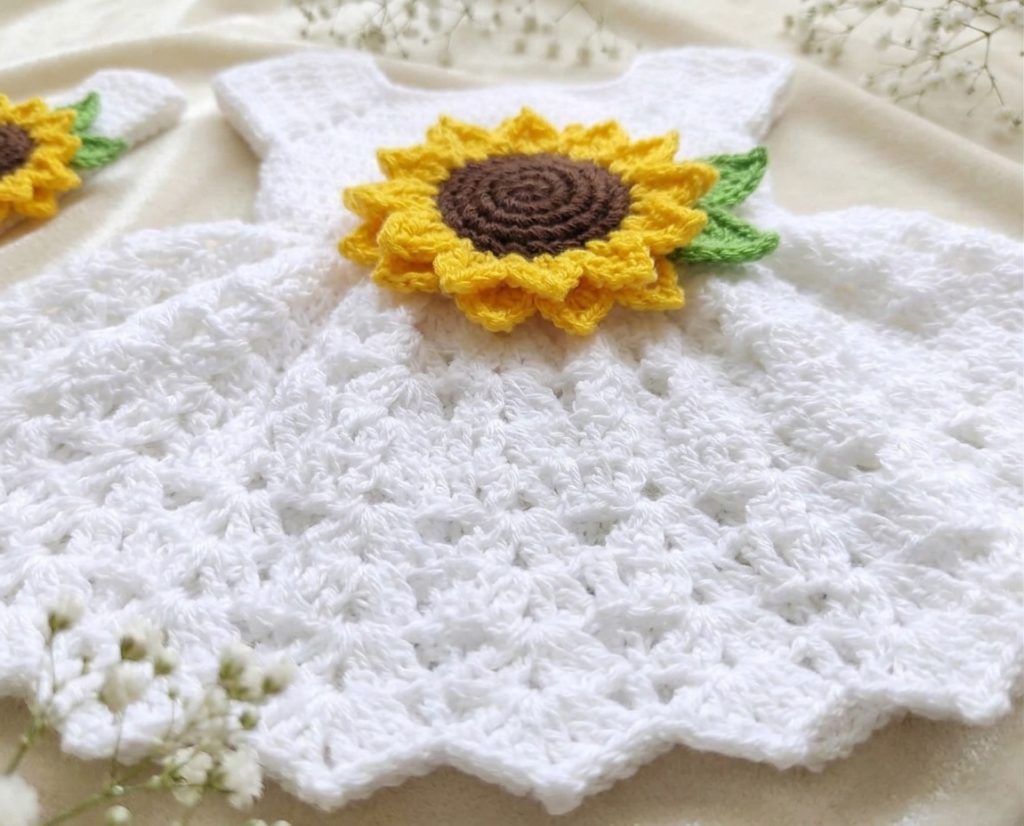
The first stitch my mother taught me was a simple chain. Every dress I make today is still built from these same basic stitches, just combined in different ways.
Fozia Mirza, crochet artist, Sukkur
Every crochet piece, from a tiny bootie to a lacy baby dress, is made from a handful of stitches. Once you know the basic stitches, the fancy ones are simply these basics combined in clever ways. Here is a simple guide to the most common crochet stitches, from the very first chain to beautiful textured stitches like the star and peacock stitch.
Basic crochet stitches
The basic stitches mainly differ in height. Each one adds an extra wrap of yarn, so the stitch becomes taller.
1. Chain stitch (ch)
The first stitch every beginner learns. Make a loop on the hook, wrap the yarn over and pull it through. Chains form the starting row of most projects, and are also used for spaces in lace and for turning at the end of a row.
2. Slip stitch (sl st)
The shortest stitch. Insert the hook, wrap the yarn and pull it through both the stitch and the loop on the hook in one go. It is used to join rounds, move across stitches without adding height, and make neat edges.
3. Single crochet (sc)
A short, firm stitch. Insert the hook, pull up a loop (2 loops on hook), then wrap and pull through both. It makes a dense fabric that is great for amigurumi, bags, shoes and edgings.
4. Half double crochet (hdc)
Between single and double crochet in height. Wrap the yarn once, insert the hook, pull up a loop (3 loops on hook), then wrap and pull through all three at once. It is quick and makes a soft, warm fabric.
5. Double crochet (dc)
One of the most used stitches. Wrap once, insert, pull up a loop, then wrap and pull through two loops twice. It grows fast and gives a softer, more open fabric, perfect for dresses, blankets and shells.
6. Treble crochet (tr)
A tall stitch. Wrap the yarn twice, insert, pull up a loop, then wrap and pull through two loops three times. It is used for lacy, airy designs.
7. Double treble crochet (dtr)
Even taller. Wrap the yarn three times before inserting the hook, then work off two loops at a time four times. It is used in open lace and decorative patterns.
US and UK crochet terms
Patterns from the USA and the UK use different names for the same stitch, which often confuses beginners. Always check which terms a pattern uses.
| US term | UK term | Turning chain |
|---|---|---|
| Slip stitch (sl st) | Slip stitch (ss) | 0 |
| Single crochet (sc) | Double crochet (dc) | 1 |
| Half double crochet (hdc) | Half treble (htr) | 2 |
| Double crochet (dc) | Treble (tr) | 3 |
| Treble (tr) | Double treble (dtr) | 4 |
| Double treble (dtr) | Triple treble (trtr) | 5 |
Fancy and textured crochet stitches
8. Star stitch
Several loops are pulled up from different points (usually five), then joined together with one wrap and closed with a small chain, which forms the centre of the star. It creates a thick, textured fabric full of little stars, lovely for blankets, cushions and cosy baby wear.
9. Peacock stitch
Large fans of many tall stitches (often 9 to 13 double or treble crochet) are worked into one stitch, alternating with single crochet. The fans sit like the open tail feathers of a peacock, making a striking lacy pattern for shawls, skirts and blankets.
10. Shell stitch
Several double crochet stitches (usually 5) are worked into the same stitch to form a fan or shell. It is a favourite for baby dress skirts, scalloped edges and blankets.
11. V-stitch
A double crochet, a chain and another double crochet worked into the same stitch, forming a V shape. It is light, quick and gives a pretty open fabric.
12. Puff stitch
Several loops are pulled up loosely in the same stitch and closed together, making a soft, puffy bump. It is used for texture, flowers and hearts.
13. Bobble stitch
Several unfinished double crochets are worked into one stitch and closed together, so a round bobble pops out from the fabric.
14. Popcorn stitch
A group of complete double crochets is worked into one stitch, then folded and closed at the top, making a firm raised popcorn shape.
15. Moss stitch
Also called linen or granite stitch. Single crochet and one chain are alternated, giving a flat, woven-looking fabric that is great for bags, scarves and baby blankets.
16. Front post and back post stitches
The hook goes around the post of the stitch below instead of into the top. These stitches make ribbing for cuffs and waistbands, and raised designs such as cables and basket weave.
17. Crocodile stitch
Stitches are worked around posts to form overlapping scales, like crocodile or dragon scales. It is used for bags, mermaid tails and statement pieces.
18. Cluster stitch
Several partial stitches are worked over a few stitches and closed together into one, creating a neat gathered look that is common in lace and granny patterns.
More crochet stitches worth knowing
19. Extended single crochet (esc)
Insert the hook and pull up a loop, wrap and pull through one loop only, then wrap and pull through the last two. It is a little taller and softer than single crochet, and drapes nicely in baby blankets.
20. Herringbone half double crochet
Wrap once, insert, pull the loop straight through the first loop on the hook, then wrap and pull through the remaining two. The stitches lean slightly, creating a pretty slanted herringbone texture.
21. Triple treble crochet (trtr)
The tallest common stitch. Wrap the yarn four times before inserting the hook and work off two loops at a time. It is used for very open, airy lace.
22. Mesh stitch
Double crochet and chains are alternated, skipping stitches, to make an open net of little squares. It is the base of filet crochet and is great for market bags and summer tops.
23. Waffle stitch
Front post double crochets and regular double crochets are alternated so that raised squares appear, like a waffle. It makes a thick, squishy fabric for blankets and dishcloths.
24. Basketweave stitch
Blocks of front post and back post double crochets swap every few rows, so the fabric looks like a woven basket. Lovely for blankets, baskets and cushions.
25. Alpine stitch
Rows of single crochet are combined with post stitches worked into the rows below, creating raised, textured columns that look like little mountains.
26. Griddle stitch
Single crochet and double crochet are alternated, and on the next row the order is swapped. It creates a firm, slightly bumpy fabric that is perfect for washcloths and bags.
27. Suzette stitch
A single crochet and a double crochet are worked into the same stitch, then one stitch is skipped. It forms a dense, pretty texture that shows off colour changes well.
28. Larksfoot stitch
Single crochet and chain spaces are alternated, and later rows reach down into the spaces below. It looks lovely in stripes and colourwork.
29. Thermal stitch
Single crochet is worked through the back loop of the current row and the front loop of the row below at the same time, making a thick double-layer fabric that is very warm.
30. Crossed double crochet
A stitch is skipped, a double crochet is made in the next one, and then another double crochet is worked into the skipped stitch, crossing in front. It forms neat little X shapes.
31. Spike stitch
Single crochets are worked into rows below, so long spikes of yarn stretch over the fabric. It is a simple way to make striking patterns with two colours.
32. Ripple or chevron stitch
Increases and decreases are placed at regular points along a row, so the fabric forms zigzags or soft waves. A classic for colourful blankets.
33. Bean stitch
Loops are pulled up several times in the same stitch and closed together, forming small, neat bean shapes. It gives a lovely texture to hats and scarves.
34. Bullion stitch
The yarn is wrapped around the hook many times, then pulled through all the wraps at once, making a long coiled stitch. It is used for raised crochet roses and decorative details.
35. Jasmine stitch
Long loops are pulled up and gathered together to form little flower shapes across the fabric. It is a beautiful, delicate stitch for shawls and baby blankets.
36. Solomon’s knot
Also called love knot. Long loops are locked with a single crochet, creating a very light, open net. It is used for airy shawls and scarves.
37. Loop stitch
Loops are wrapped around a finger while making single crochet, so long loops hang from the back of the fabric. It creates a fluffy, fur-like texture for toys, rugs and animal manes.
38. Picot stitch
Usually three chains closed back into the first chain with a slip stitch, forming a tiny decorative point. Picots add a sweet finishing touch to baby dress edges and doilies.
39. Reverse single crochet (crab stitch)
Single crochet worked in the opposite direction along the edge, which twists into a neat corded border. It gives a polished finish to necklines, sleeves and blankets.
40. Tunisian simple stitch
Also called afghan stitch. Worked with a long Tunisian hook, loops are picked up across the row and then worked off, making a firm fabric that looks woven.
Useful crochet techniques
- Magic ring: an adjustable loop used to start rounds without a hole in the centre, essential for amigurumi, hats and flowers.
- Back loop only and front loop only: working into just one loop of the stitch creates ridges and stretchy ribbing, perfect for cuffs and waistbands.
- Increase and decrease: working two stitches into one stitch makes the fabric wider, and joining two stitches into one (such as sc2tog or dc2tog) makes it narrower to shape garments.
- Fasten off and weave in ends: cutting the yarn, pulling it through the last loop and hiding the tail neatly so the piece will not unravel.
Which stitches are used in baby dresses?
Most crochet baby dresses use double crochet and half double crochet for the bodice, shell, V-stitch or puff stitch for a lacy, twirly skirt, front and back post stitches for ribbed cuffs, and single crochet for neat edges and booties.
Learning crochet? Read our guides to types of crochet, crochet hooks and the hook size chart by wool ply.
Handmade crochet at Mazagia
Every Mazagia piece is crocheted by hand using these stitches. If you would love a dress in your favourite stitch or colours, message us on WhatsApp.
Shop handmade crochet
-
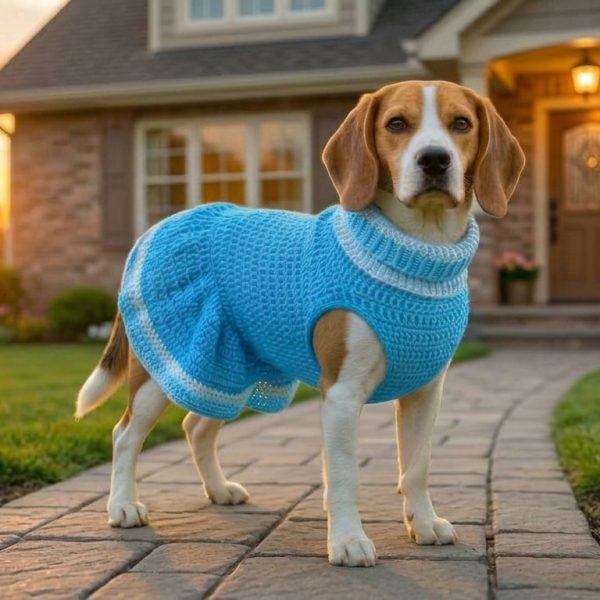
Sky Blue Crochet Dog Dress with White Stripes & Roll Neck
Price on request: ask on WhatsApp Ask Price -
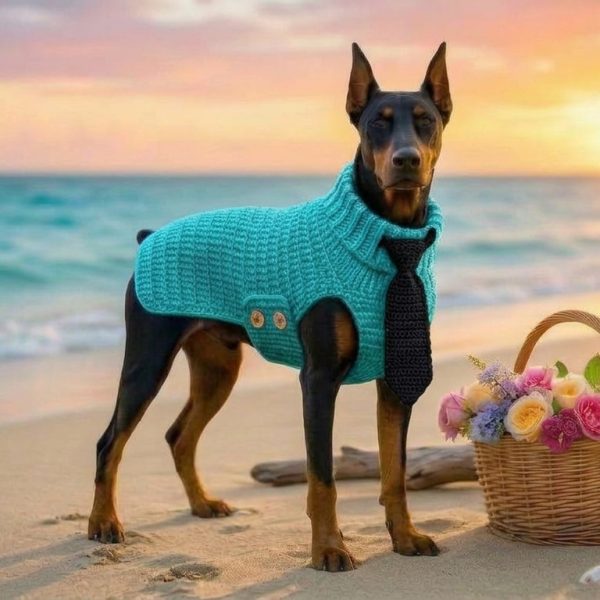
Teal Crochet Dog Sweater with Black Tie & Button Strap
Price on request: ask on WhatsApp Ask Price -
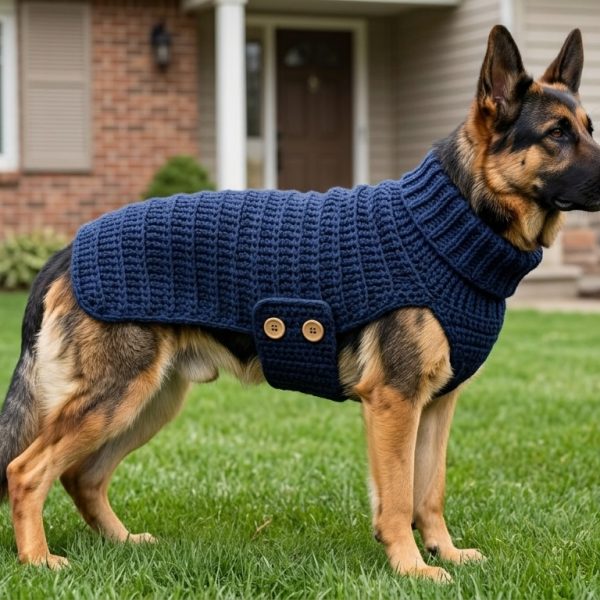
Navy Blue Crochet Dog Sweater with Roll Neck & Button Strap
Price on request: ask on WhatsApp Ask Price